Curious how a Lake Bluff cottage compares with a bungalow or an estate home? In this village, those labels often reflect more than size alone. They connect to lot patterns, architecture, and the way different parts of Lake Bluff developed over time. If you are trying to figure out which style fits your goals, this guide will help you understand what each home type can mean in Lake Bluff and what to watch for before you buy or sell. Let’s dive in.
Why home style matters in Lake Bluff
Lake Bluff has a distinct housing story. According to the village’s 2025 Comprehensive Plan, about 92.3% of homes are single-family detached and about 96% are single-family overall, which helps explain why home style and lot character play such a big role in how buyers experience the market.
The village also has a broad mix of housing ages. Roughly 11% of homes were built before 1939, 62% were built from 1960 to 1999, and 9% were built since 2000. That mix gives you a community where older compact homes, postwar neighborhoods, estate-scale properties, and newer homes can all exist within the same village.
Lake Bluff’s planning materials describe it as one community with distinct neighborhood character and a strong natural setting. That is helpful for buyers and sellers because it means a cottage, bungalow, or estate home is often tied to a specific part of the village’s history and physical layout.
Lake Bluff cottage living explained
Cottage living in Lake Bluff is rooted in the village’s earliest development. Village history materials describe the original camp-meeting settlement as a place where cottages were built on narrow 25-foot lots, often quickly and simply, creating a compact and recognizable pattern near the historic core.
Many of those early homes were small Gothic Revival or vernacular gable-front houses. In practical terms, that usually means a more modest footprint and a closer relationship to the street than you might expect from larger suburban homes. It can also mean more architectural detail packed into a smaller home.
The village’s current plan notes that many historic cottage homes sit on smaller heritage lots that do not fit modern zoning standards especially well. That matters if you are thinking about additions, major exterior changes, or a full redesign, because lot constraints can shape what is realistic.
Where cottages are most common
The village plan says the east side around the Central Business District includes original camp meeting cottages along with newer homes. That makes the area near the village core one of the clearest places where cottage character still shows up in the streetscape.
This does not mean every home there is historic or compact. Lake Bluff varies block by block, but if you are searching for older small-scale homes with historic roots, that part of the village is an important place to understand.
What buyers should expect from cottages
If you are drawn to cottage living, you may like the charm, smaller scale, and connection to Lake Bluff’s earliest architecture. You should also expect that age, original materials, and preservation considerations can make updates more detailed than they would be in a newer home.
For sellers, these homes often benefit from careful presentation. When a house has historic character or a unique footprint, strong marketing and thoughtful design choices can help buyers understand what makes it special.
Lake Bluff bungalows explained
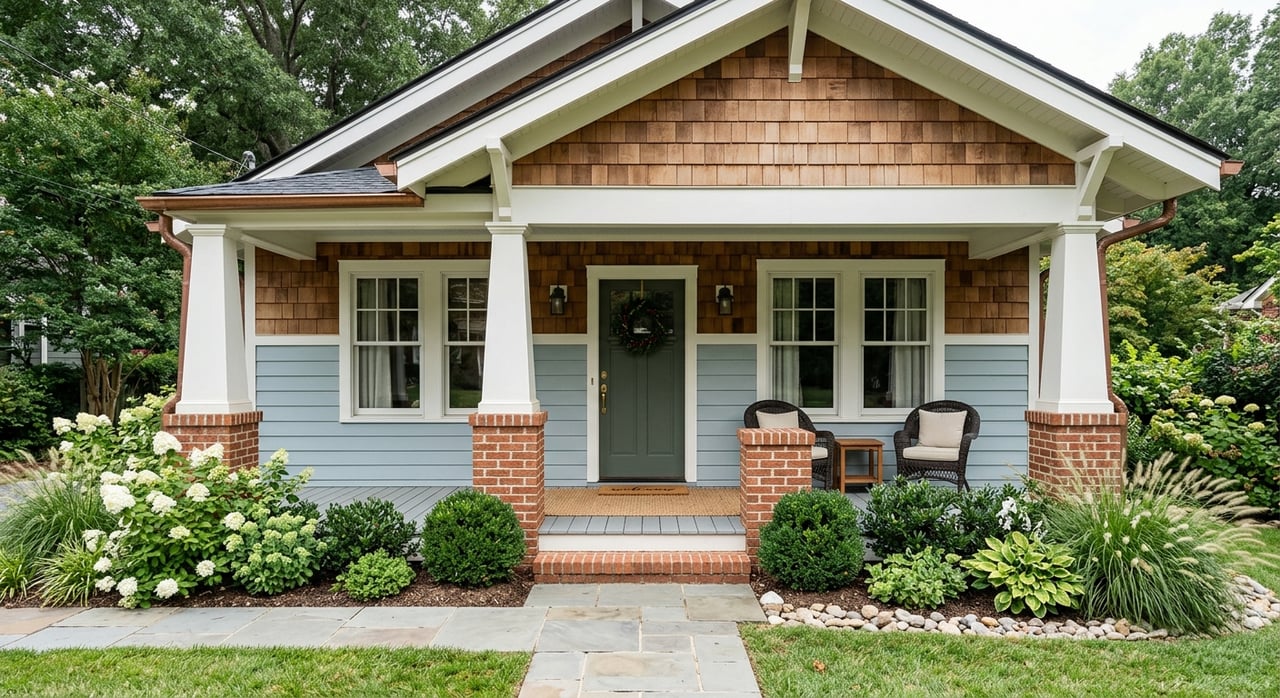
Bungalows fit naturally into Lake Bluff’s older-home mix, even though the village is not defined by a single bungalow district. The Chicago Architecture Center describes the bungalow as typically one to one-and-a-half stories with a low-pitched roof, wide overhangs, and a porch.
In Lake Bluff, the local architectural story is broader than one style. The local history museum places cottage, Craftsman, Prairie, and Four Square homes alongside estates and newer designs, which shows that smaller historic homes here are part of a varied early-20th-century streetscape.
That is useful if you are house hunting and trying to label everything neatly. In Lake Bluff, a compact older home may share some bungalow traits while also sitting within a more mixed architectural setting.
How bungalows differ from cottages
A bungalow and a cottage can both feel smaller and more intimate than an estate home, but they are not exactly the same. A cottage in Lake Bluff is often tied more directly to the original camp-meeting lot pattern and early settlement form.
A bungalow is more closely tied to architectural features such as a low roofline, broad eaves, and a porch-focused façade. In day-to-day living, both may offer a cozier scale, but the look, layout, and renovation needs can differ.
What buyers should expect from bungalows
If you like older homes with approachable scale and classic design details, a bungalow may be a strong fit. These homes can offer character and manageable living space, but they may also bring older systems, older materials, and more nuanced renovation planning.
If a bungalow appears in a village historic survey or falls within a preservation-sensitive context, updates may require extra care. That does not make ownership harder by default, but it does mean you should understand the property’s status early in your search.
Lake Bluff estate living explained
Estate-style living is a major part of Lake Bluff’s identity. The village historic survey says that within the first two decades after incorporation, more than half of the village’s original area had been used for large estates.
These homes were often designed in period styles such as French, Tudor, Georgian, and American Colonial. Many were placed in park-like settings, and even when some larger holdings were later subdivided, the sense of scale and landscape often remained part of the property’s character.
For buyers, estate living in Lake Bluff usually means the home is not just larger. It also often means the site itself plays a central role in the ownership experience.
Where estate character appears
Green Bay Road is one of the strongest estate corridors in Lake Bluff. The village plan identifies a variety of existing and former estate properties there, and notes that manor homes on former estate parcels have been preserved or adapted.
At the same time, not all estate homes are on Green Bay Road. The historic survey describes estate areas on both the east and west sides of the village, so estate-scale character appears in more than one pocket.
What estate ownership can involve
Estate-style ownership often means more land management, more landscaping, and more ongoing site upkeep. Based on the village’s descriptions of park-like settings and large lots, buyers may also encounter long drives, gardens, privacy buffers, and possible outbuildings.
The Stonebridge settlement agreement gives a useful scale reference for E-1 estate zoning by stating that buildable lots in that district must be at least 1.5 acres and 150 feet wide. Not every estate home will sit in that exact zoning context, but it shows the level of lot scale that can shape estate living in Lake Bluff.
Comparing cottages, bungalows, and estates
Choosing between these home types often comes down to how you want to live, maintain, and improve a property over time.
| Home type | Typical Lake Bluff context | Common appeal | Common considerations |
|---|---|---|---|
| Cottage | Historic core, smaller heritage lots, early village development | Charm, history, smaller scale | Lot constraints, older materials, preservation sensitivity |
| Bungalow | Older mixed-style areas, early-20th-century architectural mix | Character, porch presence, approachable size | Older systems, style-specific updates, possible survey status |
| Estate | Green Bay Road and other estate areas east and west | Land, privacy, architectural presence | Landscape upkeep, site planning, preservation review |
There is no universal best option. The right fit depends on your priorities, whether that is lower interior square footage, more land, architectural detail, easier day-to-day upkeep, or long-term renovation potential.
Preservation rules can shape your plans
In Lake Bluff, preservation status is not a side issue. It can directly affect how you renovate or reposition a home.
The village says exterior changes to landmarked properties are reviewed by the Historic Preservation Commission. It also says demolition review applies when demolition is proposed for buildings that are more than 50 years old.
That means two homes that look similar on the surface can follow very different paths for future changes. One may simply be older, while another may be historically recognized or formally landmarked.
Why this matters before you buy
If you hope to enlarge, reconfigure, or replace an older home, historic status is a practical part of due diligence. The village makes its house-by-house preservation map and survey reports public, including the Estate Areas survey, the Southeast Survey Area, and the earlier Architectural Survey.
For buyers, that information can help you understand whether a property’s design flexibility may be straightforward or more limited. For sellers, it can help shape pricing, positioning, and buyer expectations from the start.
How to decide which home type fits you
A cottage may suit you if you want historic charm and are comfortable with a smaller footprint and more detailed renovation planning. A bungalow may fit if you like classic architectural features and an older-home feel without necessarily stepping into estate-scale upkeep.
An estate home may be the right choice if land, privacy, and architectural presence are high on your list. It can be especially appealing if you value landscape setting as much as interior space.
In Lake Bluff, the smartest move is to evaluate each home in context. Style matters, but so do lot size, survey status, neighborhood pattern, and how the property aligns with your lifestyle and long-term plans.
If you are thinking about buying or selling in Lake Bluff, we can help you look beyond the label and understand how a home’s design, setting, and market position work together. Connect with Gina Shad for thoughtful guidance, local insight, and a tailored plan for your next move.
FAQs
What does cottage living mean in Lake Bluff?
- In Lake Bluff, cottage living usually refers to smaller historic homes tied to the village’s original camp-meeting development, often on narrow heritage lots near the village core.
What defines a bungalow in Lake Bluff?
- A bungalow in Lake Bluff generally refers to an older, compact home type with features such as a low-pitched roof, wide overhangs, and a porch, within the village’s broader early-20th-century architectural mix.
Where are estate homes located in Lake Bluff?
- Estate homes are especially associated with Green Bay Road, but village surveys show estate areas on both the east and west sides of Lake Bluff.
Do older Lake Bluff homes have renovation restrictions?
- Some do. The village reviews exterior changes to landmarked properties, and demolition review applies when demolition is proposed for buildings more than 50 years old.
Are all small older homes in Lake Bluff cottages?
- No. Smaller older homes in Lake Bluff can include cottages, bungalows, Craftsman homes, Prairie homes, and Four Square homes, depending on their design and historical context.
How do I know if a Lake Bluff home is historically recognized?
- The village provides public historic preservation maps and survey reports that can help you identify whether a property appears in a survey area or has a more formal preservation status.